
Diagnosis
We read the site: seabed, light, currents, nutrient load, species, uses and what arrives from the catchment, before touching anything.
True Regenerative · sea systems
Sea · scientific collaborationAt sea and in rivers we apply the same approach as on land: observe first, then decide. Together we study whether a seabed, a mussel raft or a seaweed line fits the site, the species and the management, and which specialists and permits are needed.
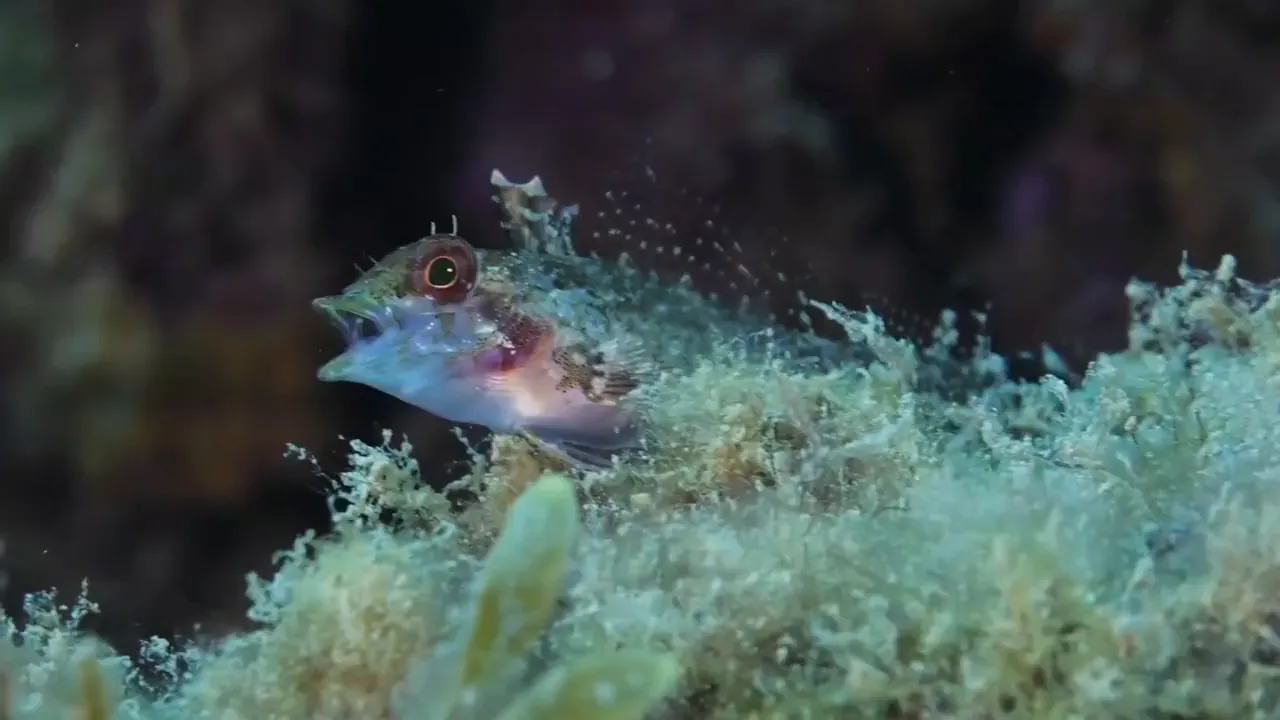
Video: Underwater Gardens International (UGI).
The same four phases as on land, from the first visit to autonomy. Measurement supports every phase, to help decide and adjust.
We read the site: seabed, light, currents, nutrient load, species, uses and what arrives from the catchment, before touching anything.
Together we choose which route is worth studying —a seabed, a mussel raft, a seaweed line… or no intervention—, with specialists, permits and budget.
We start alongside you and small, with your team and whichever specialists are needed, and adjust based on what we see.
We follow colonisation and cultivation in stages, with supporting sampling, until your team can manage it on its own.
What happens on the farm reaches the river, the delta and the sea. That is why we look at the whole water system, not just the seabed. Its potential for water quality, marine life and fishing depends on the site, the species, the management and the permits; sometimes the sensible choice is not to intervene. Not all aquaculture is regenerative.
Supporting measurement: observing and sampling over time to learn what works and what does not.
More rain soaking in and less soil and nutrients washed downstream.
The river carries what leaves the farms down to the delta, without cutting off the water that downstream ecosystems need.
In the delta, rice paddies, fresh water and the sea meet.
On the seabed, organic matter, microbiology and minerals decide what life colonises it: microbiology and algae arrive first, then invertebrates and fish.
Ropes hanging from the raft, reflected in the water. This is a mussel farm, not a reef: mussels filter the water and feed on what the sea already produces, with no feed added.
UGI is an independent Barcelona organisation that designs structures to restore seabeds. It is not a True Regenerative project: we collaborate with its team on science and publications.
WIPO chose UGI as a global success story (“invention of the century”). According to El Periódico, more than 100 species were recorded at Port Olímpic within 12 months.
30 artificial reef units designed and produced by UGI with the scientific team of Hans Kristian Strand (Institute of Marine Research), as a refuge for juvenile cod and a base for kelp. As told by Celia González, architect on the design team.
Xavier Vélez Parera is a co-author, with the UGI team, of Bracho-Villavicencio et al., Benthic Colonization on New Materials for Marine Ecosystem Restoration in Porto Cesareo, Italy, J. Mar. Sci. Eng. 2024, 12(1), 169 (MDPI).
Proposal for Balfegó (in preparation)
Proposal for Balfegó, in preparation: a pilot for growing macroalgae next to tuna cages. UGI and the Universitat Autònoma de Barcelona (UAB) are reviewing it before it is presented. It has not been carried out, so there are no results to show.
In progress
A project under study to produce and valorise microalgae. No production yet. We do not claim unmeasured yields or benefits.
Biological fertilisation to validate on real farms, in trials against a control.
Live feed or concentrate for larval rearing, with a case-by-case specification.
Food and colourants (spirulina and others), under the rules for each end use.
Segments, specifications and regulatory frame.
Application trials with biomass bought from others.
Small-scale culture, only if the previous stage justifies it.
Only if the continue criteria are met.
Module growth or a partnership, later on.
Selected among 15 projects for the Orizont StartDay (9/6/2016).
Proposal for Balfegó (L’Ametlla de Mar, 2017–2018): macroalgae-on-nets pilot beside a trial cage, designed by Xavier; it was not carried out. The updated proposal, in preparation, is under Macroalgae. The separate work with UGI is published.
Tell us about your project, at sea, on a river or on land: we look with you at whether it fits the species, the site and the management, and which specialists and permits are needed.