
Bokashi
A fermented fertiliser ready in about two to three weeks. Dry manure, a carbon source (straw, charcoal), rock dust, forest soil, yeast and molasses are mixed with chlorine-free water and turned daily.
True Regenerative · field systems
On-farm · input autonomyCompost, bokashi, biochar, ferments and biofertilisers made on your farm. We design the setup and the protocol, and train your team to manage it independently. No miracle products.
What you can make on your farm, grouped by family.
Organic matter that breathes and ferments: the living base of the soil.
Biol, aerobic and anaerobic ferments and seed treated on the farm: liquid microbiology.
Some traditional mineral broths are used as plant protection products. They are regulated: only authorised products may be used. We do not publish recipes here.
From branch to stable carbon: pyrolysis with the farm’s own residues.
What we teach you to make on the farm, explained by how each one works. The full protocol is worked through in the field and in training. If you want to sell them to others, see the FAQ: it is regulated.
A fermented fertiliser ready in about two to three weeks. Dry manure, a carbon source (straw, charcoal), rock dust, forest soil, yeast and molasses are mixed with chlorine-free water and turned daily.
A liquid biofertiliser that ferments without air in a sealed drum with a valve: fresh manure, molasses, whey or milk, ash and minerals added in stages. It is ready when the valve stops bubbling, usually after one to two months.
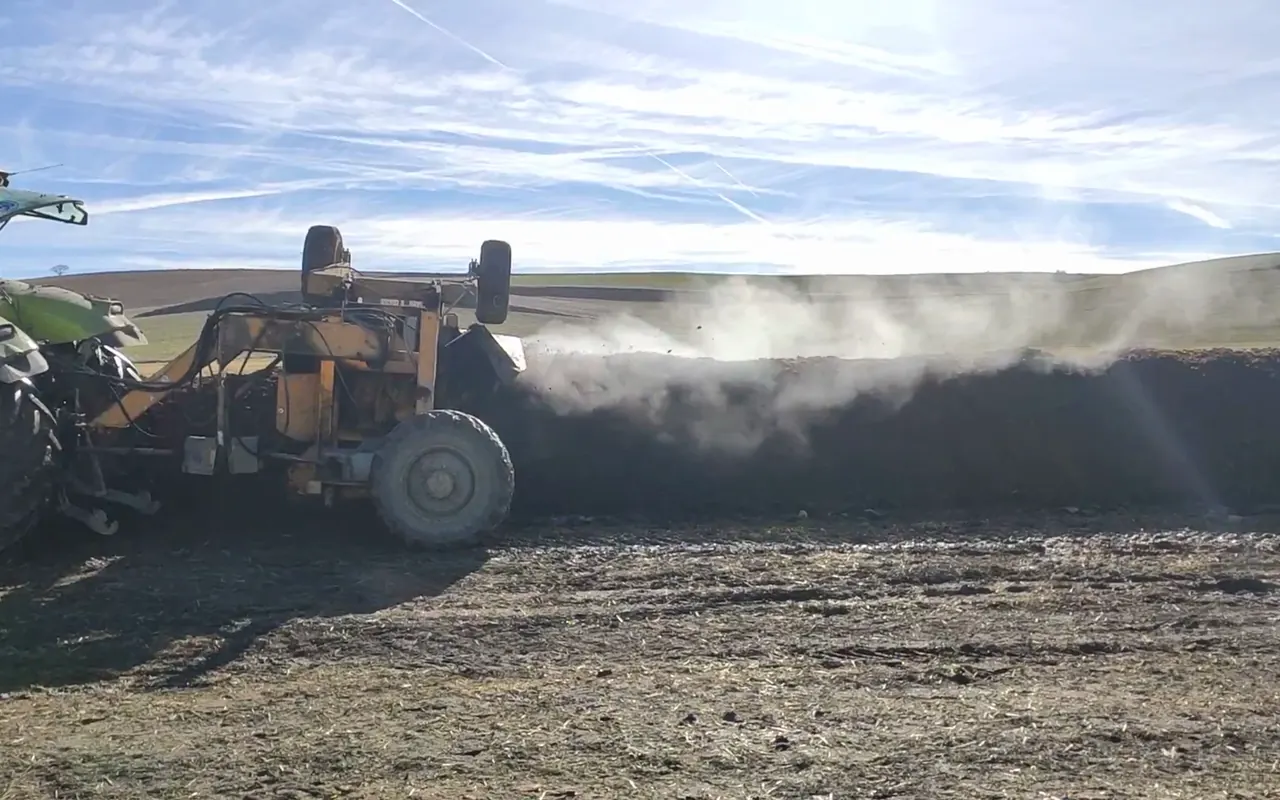
A pile of carbon-rich and nitrogen-rich materials, moist but not dripping. Within days it passes 45 °C and can reach about 65 °C: this hot phase sanitises the material.
Leaf litter is collected from a nearby forest with no chemical treatments, mixed with bran or cereal flour, molasses and rock dust, and fermented without air in a sealed drum for about 30 days. Part of it is then activated in chlorine-free water with molasses to make a liquid for irrigation or foliar use.
A biofactory is the space and workflow where bio-inputs are produced from local or nearby materials: organic residues, carbon sources, minerals where appropriate, and composting or fermentation processes. The goal is to reduce dependence and match plant nutrition to the soil you have, not to make compost because it’s fashionable. What you are really producing is microbiology and organic matter: the life soil needs to release minerals and feed the plant.
On the farm, residues can return to the soil as compost, bokashi or other bio-inputs, depending on the materials and the assessment. The soil feeds the plant, and some plant residues return to the biofactory. We recycle materials; energy is transformed, rather than moving in a closed loop.
sugars ↔ minerals · amino acids · microbiology
These are not compulsory steps, and not all are bio-inputs: nutrition guides decisions and measurement helps us check them. Tap a seed in the flower, or a number, to see each line.
Piles, turning, maturity and use in the field.
Fermentation of organic materials, a method widely used in Latin American regenerative farming.
Stable charcoal made from plant residues by pyrolysis: wood is heated with little oxygen, so the carbon stays fixed instead of going up in smoke.
Liquid biofertilisers, including lines with minerals chelated through fermentation (circular economy). method · biofactory
When the diagnosis calls for it: managing microbial communities and their preparations, always with the farm in mind and never as a “magic product”.
Bio-inputs that serve the plant’s metabolism (Chaboussou’s trophobiosis framework). Method · nutrition
Field observation and laboratory analyses to check and adjust management. Chromatography and crystallisation are complementary qualitative tools. Chromatography
Good bokashi smells mildly fermented, like forest soil, and heats up in the first few days.
If it smells rotten or of ammonia, it is almost always one of these: too much water, too much nitrogen (too much manure or green waste) or not enough air.
If it doesn’t heat up, it may be too dry or too wet, short of sugar or microorganisms, too small a pile, or too cold.
How to fix it:
If nothing changes after these adjustments, or black moulds appear, don’t apply it. Write to us with a photo and we’ll help you find the cause.
Bokashi must not go above 50 °C; if it does, turn it more often.
Yes. We help you set up a biofactory with local resources and train you to run it yourself.
Making them for your own farm, yes. Selling them to others is regulated: in Spain by Royal Decree 506/2013 on fertiliser products, and in the EU by Regulation (EU) 2019/1009. Talk to us before taking that step.
We design and support biofactories as part of our services (diagnosis → design → implementation → training and support) and run hands-on training on the farm and in the classroom. The know-how has to stay with your people: making, observing, deciding.
You can also explore regenerative agriculture, keyline and water and the cases where the biofactory is part of the system.
We start with a diagnosis of materials, space, team and priorities, so you can assess whether it makes sense before you invest. No published rates.